People born on February 29 age every year. Their exact month/day birthday appears only in leap years, but counting those anniversaries doesn't measure their age. In years without February 29, they can choose another day for a personal celebration.
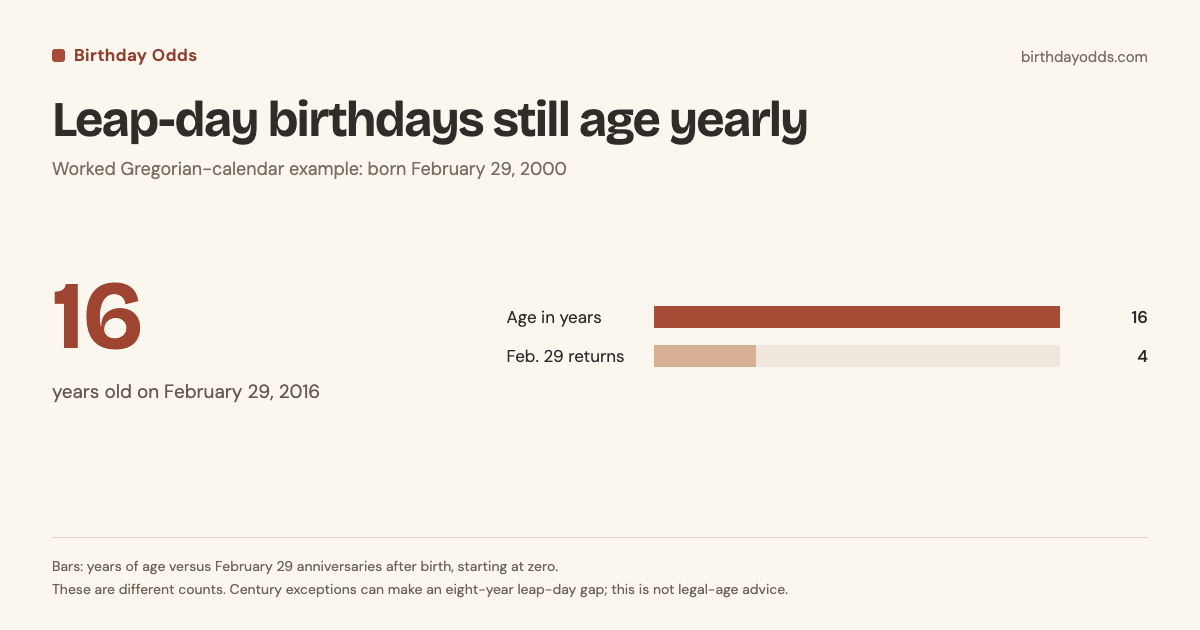
For example, someone born on February 29, 2000 is 16 years old on February 29, 2016, after 4 February 29 anniversaries since birth. Saying they're "only 4" would be a joke about the calendar, not their age.
Leap-day birthdays still age yearly
Worked Gregorian-calendar example: born February 29, 2000
Bars: years of age versus February 29 anniversaries after birth, starting at zero. These are different counts. Century exceptions can make an eight-year leap-day gap; this is not legal-age advice.
Age and leap-day anniversaries are different counts
The table follows someone born on February 29 through the Gregorian calendar. It excludes the day they were born from the anniversary count. In common years it shows age on March 1, which is on or after either celebration date.
| Date in the example | Age in calendar years | February 29 anniversaries since birth |
|---|---|---|
| February 29, 2000 | 0 | 0 |
| March 1, 2001 | 1 | 0 |
| February 29, 2004 | 4 | 1 |
| February 29, 2016 | 16 | 4 |
| February 29, 2024 | 24 | 6 |
| February 29, 2028 | 28 | 7 |
The age column counts calendar years since birth at the dates shown. The last column counts actual February 29 dates after the birth year. Neither column is a rule about legal eligibility or how a particular service handles birthdays.
When is the next February 29?
The next four leap days after 2026 are February 29, 2028; February 29, 2032; February 29, 2036; February 29, 2040.
The calendar reference hosted by NASA gives the Gregorian rule: a year divisible by four is a leap year, except a century year must also be divisible by 400. So 2000 had a February 29; 2100 won't.
"Every four years" is a useful shorthand for many birthday plans, but it isn't a permanent rule. The gap from February 29, 2096 to February 29, 2104 is 8 years because 2100 skips leap day.
February 28 or March 1: when should you celebrate?
For a party, choose the day that works for you. February 28 keeps the celebration in your birth month. March 1 is the day after February ends in a common year. You can also choose a nearby weekend. None of these choices changes the date you were born.
If you're planning for someone else, ask their preference. A February 28 greeting might suit one person and annoy another who prefers March 1 or makes a special occasion of actual leap days.
For forms that ask for your date of birth, February 29 in your birth year remains the actual date. The Honor Society of Leap Year Day Babies documents forms that reject valid February 29 birth dates. A celebration date doesn't substitute for a birth date; contact the service if its form cannot accept yours.
Does a leap-day birthday make you rarer?
That's a separate birth-record question. The rarest-birthday guide explains February 29's historical ranking and the difference between total births and births per actual leap day. The February guide compares the month's dates.
You can check a February 29 birthday without entering a birth year. That lookup uses historical U.S. birth records, whereas this calendar guide applies the Gregorian leap-year rule. The methodology explains what the birth-record figures measure.